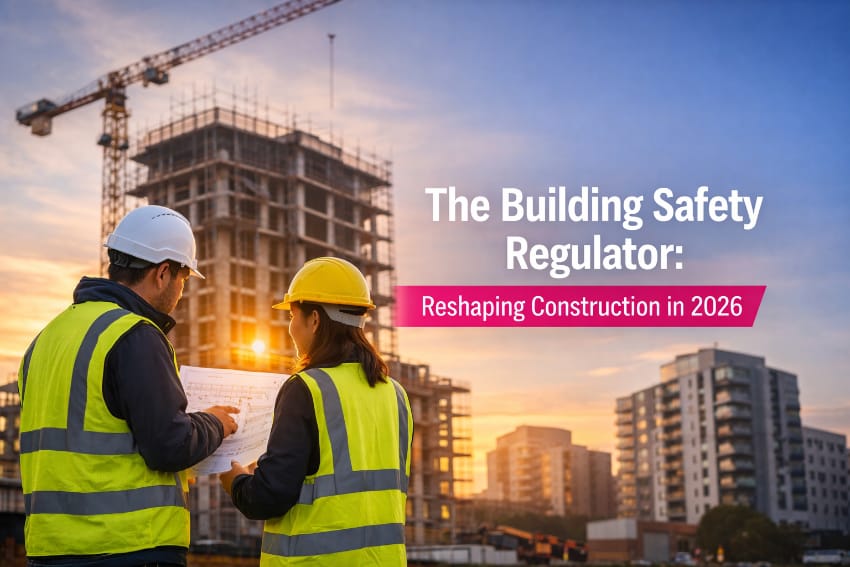

The UK Government’s response to the Building Safety Levy technical consultation provides greater clarity on how the levy will operate and what it will mean for residential development. Introduced as part of the wider reforms following the Grenfell Tower fire, the levy is designed to ensure the construction industry contributes towards the cost of remediating unsafe buildings, reducing the burden on taxpayers and leaseholders.
Due to be implemented on 1st October 2026, the levy will be embedded within the building control process, making it a mandatory requirement before construction can begin. Rather than operating as a standalone charge, it will form part of the wider regulatory framework, reinforcing the shift towards early-stage compliance and accountability.
The levy will apply to most new residential developments in England, including mixed-use schemes with a residential element, with responsibility for payment sitting with the client or developer. It will be calculated on a floorspace basis, using a rate per square metre, with variations across local authority areas to reflect differences in land value and market conditions.
A number of exemptions have been confirmed following consultation, including certain affordable housing schemes, smaller developments, and some community buildings. Reduced rates are also expected to support brownfield development, helping to balance the need for funding with the importance of maintaining housing supply.
Local authorities will be responsible for administering and collecting the levy through the building control system, with payment forming a formal part of the approval process. Failure to comply could result in delays or enforcement action, further emphasising the need for early planning and coordination.
For the industry, the implications are clear. The introduction of a levy tied directly to building control approval means that cost, compliance and programme must now be considered together from the outset. Developers will need to factor the levy into viability assessments, while design teams may face increased pressure to optimise layouts and efficiency. Project programmes will also need to align with both Gateway approvals and levy requirements, reinforcing the importance of a coordinated approach.
Ultimately, the Building Safety Levy represents a continuation of the wider cultural shift across the construction industry. Building safety is no longer solely a regulatory or design consideration — it is now embedded within the financial structure of development. As implementation approaches, it reinforces the value of early-stage advice, clear strategy and informed decision-making in delivering safe, compliant and viable projects.